

ENVIRONMENTAL COMMITMENT
At NagaWorld, we recognise that environmental risks are also business risks. Climate change has direct and knock on socio-economic effects on the tourism industry, our operations, our supply chain and our stakeholders. We are also cognizant that our aspirations for improved environmental performance entail a delicate balance with providing top-notch hospitality experiences for our guests. As we advance our environmental commitments, we review our operations and value chain to ensure alignment with our environmental goals. It involves supporting government-led environmental initiatives, adopting industry best practices, encouraging our workforce to minimise resource use and reporting our environmental performance transparently.
Since 2023, we established 2030 environmental targets, and issued an Environmental Policy as a guiding framework for managing our environmental impacts. The Environmental Policy communicates our commitment, principles and governance to conduct our business responsibly and minimise environmental impacts. To view our Environmental Policy, click here.
Environmental Advocacy
We continuously raise awareness of environmental sustainability through targeted initiatives for our guests, workforce and community.
Guests
- “Plastic Straw Free” initiative
- Towel and linen reuse program
- Environmental posters in restrooms promoting water conservation and the use of hand dryers
Employees
- Annual environmental awareness online refresher training for all employees
- Environmental posters in employee restrooms promoting water conservation and the use of hand dryers
- Food waste segregation posters at staff cafeterias
Community
- Environmental volunteerism activities led by our NagaWorld Kind Hearts
Environmental Targets
| Aspect | 2030 Target | Baseline | 2025 Performance vs Baseline | 2025 Performance vs 2025 Interim Target | Status |
| Climate Change | Reduce Scope 1 and 2 (location-based) GHG emissions by 10% from 2018 baseline | 21,950 tCO2e | ▼5% | ▲1% | To monitor closely |
| Energy | Reduce grid electricity use by 25% from 2018 baseline | 66,307 MWh | ▼14% | ▲0.2% | To monitor closely |
| Water | Reduce water use by 10% from 2019 baseline | 699,571 m3 | ▼27% | ▼23% | On track |
| Waste | Achieve 100% food waste diversion | 100% | Maintained 100% food waste diversion | On track | |
Environmental Performance
GHG Emissions Performance
Total Scope 1 and 2 GHG emissions remained relatively constant year-on-year (“YoY”), even after accounting for the new sources of GHG emissions. Compared with 2024, on a like-for-like basis, excluding the newly added GHG sources, total Scope 1 and 2 GHG emissions decreased by 3%. Contributing to the decrease were lower electricity and LPG consumption and the retirement of the ageing bus fleet. In contrast, fugitive GHG emissions increased due to updated emission factors and greater refrigerant use. Scope 2 GHG emissions, including new GHG sources, were almost on par with 2024’s levels, with a slight decrease of 0.2%. Scope 3 GHG emissions increased by 7%, mainly due to the inclusion of GHG emissions from the purchase of non-F&B products and services.
Scope 1 and 2 GHG Emissions

GHG Emissions (Scope 1 and 2) Intensity 1

Total GHG Emissions

Scope 1 and 2 GHG Emissions by Source

Note:
| (1) | The computation covers NagaWorld and Central Laundry only. It excludes Scope 1 GHG emissions from mobile combustion as the intensity is normalised over gross floor area. GHG emissions from NagaFarm was also excluded as its expansive land area and significantly different operational profile are not comparable to the Group’s Integrated Resort operations and would materially skew and reduce the decision-usefulness of the intensity metric. |
1.1 GHG Emissions Reduction Initiatives
Reducing energy usage and refrigerant loss are our core focus in lowering GHG emissions. We monitor the hotel occupancy levels and human traffic on our premises, adapt the operating hours of our building systems and perform preventive maintenance. Our energy reduction initiatives targeting lighting and cooling have consistently contributed to reducing GHG emissions. Since 2016, we have avoided at least 1,256 tCO2e from implementing these initiatives.
Our electricity is supplied by the Phnom Penh city grid, Electricite Du Cambodge (“EDC”). EDC’s grid energy mix comprises hydropower, coal, fuel oil, biomass, solar energy and imported energy from the region. More than half of Cambodia’s energy supply is generated from renewable energy. This is likely to increase as Cambodia committed to achieve 72% renewable energy share by 2035. In support of global climate action and Cambodia’s climate goals, in 2023, we committed to reducing grid electricity use by 25% by 2030 from our 2018 baseline, aligning with Cambodia’s National Energy Efficiency Policy for commercial buildings.
Energy Performance
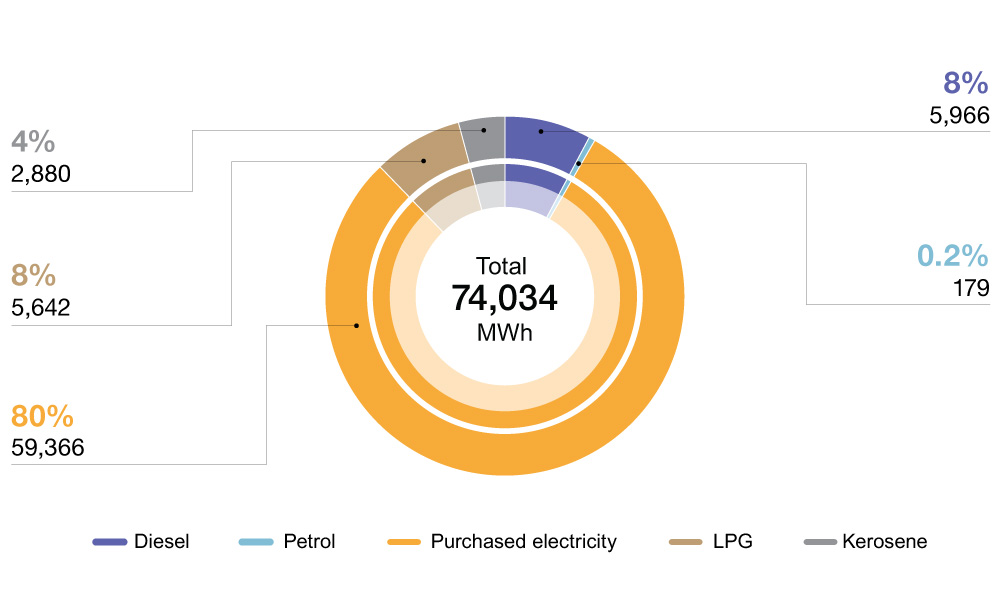
Compared with 2024, energy use decreased by 3% YoY after including the new energy sources, and by 6% on a like-for-like basis that excludes the new energy sources. The decrease is mostly attributed to lower LPG and electricity use, and the retirement of the ageing bus fleet. On the other hand, diesel use for the generator sets and hot water boilers increased to a lesser extent.
Energy Use 2

Grid Electricity

Energy Use by Fuel Type
Note:
| (2) | Energy use intensity covers NagaWorld and Central Laundry only. It excludes energy from mobile combustion as the intensity is normalised over gross floor area. NagaFarm was excluded as its expansive land area and significantly different operational profile are not comparable to the Group’s Integrated Resort operations and would materially skew and reduce the decision-usefulness of the intensity metric. |
Energy Reduction Initiatives
Pursuing energy reductions through operational modifications or equipment upgrades have improved our energy efficiency and resulted in financial savings. Since 2016, we have accumulated at least 5,371 MWh and US$850,000 in energy savings through energy-saving initiatives. The energy reduction initiatives include
- Adjusting the operational hours of lighting and HVAC systems
- LED relamping
- Installing isolator switches to reduce the operational hours of the kitchens’ motor exhaust fans
- Replacing the exhaust fan motor and control panel with variable speed drive
- Removing unnecessary indoor lighting
- Maintaining 27°C on non-operational hotel floors
Our hotel rooms and housekeeping protocols are designed to save energy
- Hotel rooms are fitted with card-activated power switches
- Standard room temperature is set at 23°C
- Daytime room cleanings utilise natural lighting
- Keeping curtains closed to reduce cooling loss in unoccupied hotel rooms
By design, our Central Laundry utilises state-of-the-art, commercial laundry systems that are energy-efficient.
- Steam recycling recovers 20% of steam to pre-heat the boiler’s feedwater up to 90°C, reducing the diesel used to generate fresh steam
- Evaporative cooler pads and air exhaust fans regulate indoor temperature without the need for extensive air-conditioning
- 100% LED bay lights installed
As we step up our efforts to reduce energy consumption, we plan to form an energy saving committee in 2026 that is led by our Maintenance & Engineering department. The energy saving committee will conduct energy audits and implement more targeted energy saving measures for significant energy uses.
| Double-glazed windows | We completed the installation of double-glazed windows for more than 500 hotel rooms and offices at Naga 1. The benefits include improved building thermal performance and lower energy consumption. |
| Energy audit | The ASHRAE Level 2 energy audit for Naga 2 assessed the energy consumption and efficiency of the major building systems, and surveyed light and air quality levels. We are studying the feasibility of the recommendations for implementation. |
| LED relamping | As one of the energy audit recommendations for Naga 2, we replaced more than 200 fluorescent lights with LED lights. The LED relamping project will continue in 2026 to cover more areas. LED lights consume less energy, have longer lifespans and are more environmentally-friendly for recycling. |
| LPG meters | To more accurately monitor and manage our LPG consumption, we installed LPG meters in Naga 1’s staff cafeteria and four F&B outlets. More precise data will enable better oversight of fuel usage, identification of potential inefficiencies and more effective cost control. |
As an Integrated Resort that welcomes large numbers of people daily, indoor air quality management is essential to protecting the health, comfort and well-being of our guests and employees. Our operations also affect the outdoor environment through emissions from our vehicle fleet, backup generators and use of LPG in kitchens. These activities contribute to local air pollutants and we recognise the need to better manage their impacts on surrounding communities and the environment.
Air Quality Improvement Initiatives
For the comfort of our building users, we implemented monitoring and preventive measures to manage indoor air quality. It includes inspecting and deep cleaning AHUs, and furnishing common areas with plants to boost greenery and air quality.
In managing vehicular emissions, we routinely schedule maintenance checks for our fleet based on the vehicle mileage. Our drivers also adopt environmentally friendly practices that reduce tailpipe emissions and save fuel.
- Turning off engines when waiting for guests
- Reducing idle vehicle emissions by dispatching vehicles to the pickup point only when guests are ready for departure
- Checking traffic conditions ahead to avoid traffic jams
Our water is supplied by the Phnom Penh Water Supply Authority (“PPWSA”). The treated freshwater from PPWSA complies with the drinking water standards of the World Health Organization and national drinking water standards. In assessing our risk exposure to water stress, we utilised the World Resources Institute’s Aqueduct Water Risk Atlas tool. Our properties in Phnom Penh face an overall medium-high water risk. While we have not encountered significant issues in sourcing water fit for purpose, we recognise that sustainable water management practices are essential for the long-term preservation of water security in the community.
Water Performance
The water usage data covers NagaWorld and Central Laundry only. Water consumption was 5% lower YoY. Compared with our 2030 target to reduce water consumption by 10% against our 2019 baseline, we exceeded the target with a 27% reduction in 2025. As we have achieved the target ahead of 2030, we will look into setting a steeper target in the next review of our environmental targets.

4.1 Water Conservation Initiatives
We incorporate water conservation features and practices into our building design and maintenance.
- Water-saving toilets and showers in hotel rooms
- Automatic sensor faucets at Naga 2’s public area restrooms
- Regular inspections and maintenance of hotel rooms
- Training employees on water management during cleaning
- Preventive maintenance for air conditioning filters, fan coil units and AHU coil cleaning
- Using native plants in landscaping
We also educate our guests and employees on the importance of saving water through environmental messages in the hotel rooms and the restrooms in public areas and offices. Our towel and linen reuse program in hotel rooms allows guests to choose a more sustainable stay by not changing bed linens and bath towels daily. At Central Laundry, we utilise water-efficient front-loading washers and tunnel washers. The patented PulseFlow® Technology reduces the tunnel washer’s water usage by 50% by reusing the final rinse water for the next pre-washing cycle.
In managing our waste, we embrace the 5Rs waste management hierarchy – Reduce, Reuse, Recycle, Refuse and Remind. The 5Rs approach helps us to steer towards minimising resource use and maximising resource recovery. We generate various types of waste and have invested efforts to segregate them for recycling. All unrecycled waste is collected by the municipal waste collector and sent to the landfill. As we are primarily a service business, we do not produce material amounts of hazardous waste or significant packaging waste. We comply with Cambodia’s law on waste management, namely the Sub-decree on Solid Waste Management.
Waste Performance
Waste data covers NagaWorld only. Total waste generated in 2025 decreased by 1% YoY. Recycled waste saw an increase of 9%, while non-recycled waste decreased by 3%. Waste diversion from the landfill saw a steady improvement over the last three years, hitting 23% in 2025. In Cambodia, there are limited large-scale recycling facilities and waste technologies. Most recycling in Cambodia is facilitated informally through street waste collectors and small-scale waste recyclers. As such, we focus on identifying waste hotspots within our operations and seek out partnerships with waste management companies that offer innovative recycling solutions.
Waste Management Initiatives
The waste management hierarchy guides our waste management strategy. It prioritises waste prevention at the source and discourages disposal to the landfill. We aim to recycle as far as possible for waste we cannot reduce further. This involves working with suitable partners and conducting trials to test the feasibility of waste solutions.
| Waste type | Waste management initiatives |
| Cooking oil |
|
| Electronic |
|
| Food |
|
| In-room amenities |
|
| Packaging |
|
| Paper |
|
| Plastic |
|
| Textile |
|